Back to Hub

04 / Portfolio station

Research Lab

Computer vision, posture and temporal learning.

Back to Hub

04 / RESEARCH

Research Lab

My master’s research explores how computer vision can track changes in posture over time.

  • Ergonomic posture assessment
  • Vision & pose estimation
  • Temporal deep learning
  • Workplace ergonomics
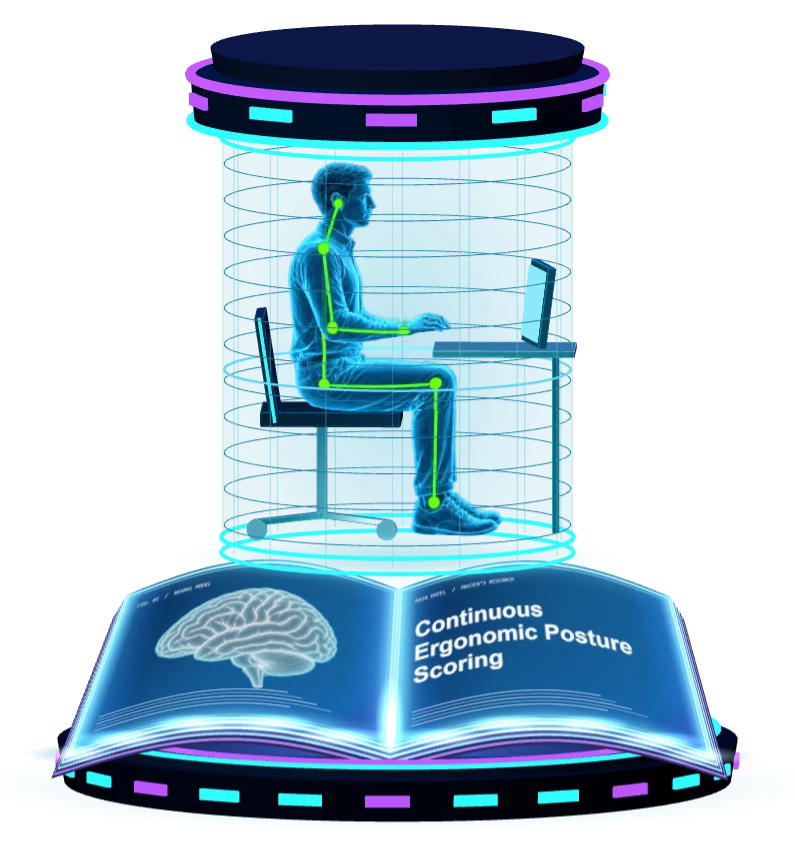
Illustrative seated pose and joint landmarks

Continuous Ergonomic Posture Scoring Using Spatiotemporal Deep Learning for Preventive Healthcare

Estimating joint positions across a sequence of images helps connect individual poses to a continuous ergonomic score.

Research type
Master’s research paper
Method
Pose estimation and temporal deep learning
Status
Submitted / Publication Pending
Submitted
ITEGAM-JETIA · June 2026
Focus area
Posture analysis and workplace ergonomics
Research workflow

  1. Image / video
  2. Pose landmarks
  3. Temporal model
  4. Posture scoring
  5. Ergonomic interpretation

Research toolkit

  • Python
  • OpenCV
  • TensorFlow
  • PyTorch
  • Jupyter
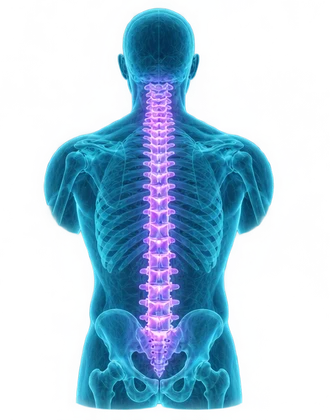
Back view with the spine highlighted

Key outcomes

  • Posture scoring model developed
  • Manuscript prepared with co-author review
  • Paper submitted in June 2026

Study notes

September 2025 – June 2026

Research question

How can changes in body position across a sequence of images inform continuous ergonomic posture scoring?

I carried out the research, developed the model and prepared the paper, with academic guidance, review and editorial feedback from my guides and co-authors.

Authors · Raja Patel, Jashvantkumar Dave, Vishal Barot, Vandan Bhavsar

Illustrative workflow

  1. Image / video
  2. Pose landmarks
  3. Temporal model
  4. Posture scoring
  5. Ergonomic interpretation

Techniques explored

Computer vision identifies body landmarks. Temporal deep learning considers how their positions change across successive frames.

Ergonomic posture assessmentComputer visionHuman pose estimationTemporal deep learningPreventive healthcare

Submitted / Publication Pending

ITEGAM-JETIA · June 2026

Research period · September 2025 – June 2026

Discuss this research